The Relationship Between Snuff Processing Technical Parameters and Nasal Mucosa Irritation
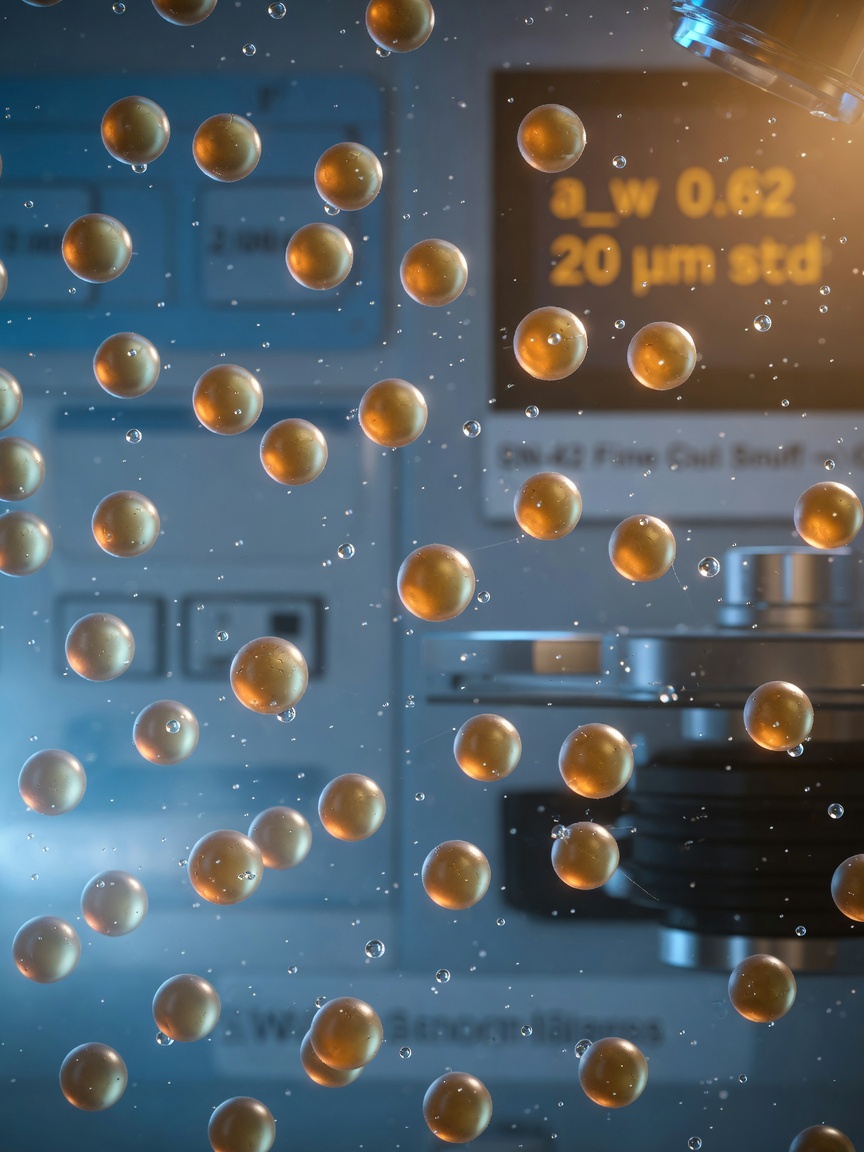
1. Introduction: From Traditional Craft to Modern Precision Manufacturing
In the long history of tobacco processing, snuff has always been an art of "balance." For this finely powdered product inhaled through the nasal cavity, the core contradiction of the user experience lies in: how to maximize nicotine absorption efficiency and flavor release while minimizing the physical and chemical irritation to the nasal mucosa (Nasal Mucosa)?
For a long time, many practitioners simply attributed the "irritation" to the quality of the tobacco variety, but this is an extremely shallow understanding. Through nearly a decade of production practice and laboratory observation, we must clarify a core viewpoint: damage and discomfort to the nasal mucosa are essentially the result of uncontrolled physical parameters (such as particle size, moisture) and chemical parameters (such as pH value, additive types) during processing.
Processing parameters determine not only the physical properties of the product, but also directly determine the threshold of biochemical irritation. This article will explore the underlying technical logic and physiological mechanisms in depth from three key dimensions: grinding fineness, moisture control, and additive formulation.
2. Grinding Fineness: A Micron-Level Game and Mechanical Wear
In the grinding stage of the snuff production line, what we pursue is often not "the finer, the better," but an extremely precise particle size distribution (Particle Size Distribution, PSD).
1. Surface Area Effects and Adsorption Kinetics
The essence of grinding fineness is to change the surface area of the material. According to geometric principles, when the particle diameter decreases from 100μm to 10μm, the surface area per unit mass increases nearly 10 times. In the highly sensitive biological environment of the nasal cavity, this means:
- Faster solute release: finer particles mean a larger surface area, allowing active ingredients such as nicotine and flavorings to dissolve more rapidly in the mucus layer on the surface of the nasal mucosa.
- More intense chemical impact: due to the sharp increase in release rate, mucosal cells face a sudden high-concentration chemical impact, easily triggering inflammatory responses.
2. Mechanical Irritation Mechanisms: The Cost of Physical Friction
Beyond the chemical dimension, the mechanical abrasion (Mechanical Abrasion) of the nasal mucosa caused by grinding fineness cannot be ignored.
The surface of the nasal mucosa is covered with a layer of cilia (Cilia) and mucus, the body's first line of defense against foreign matter. Coarse particles (particle size > 50μm), during inhalation, with their sharp-edged geometric structures, act like tiny "sandpaper," directly scraping the basal layer of the cilia and even destroying the integrity of epithelial cells. This physical damage is irreversible, and long-term exposure can lead to mucosal hyperplasia or atrophy.
3. Production Case Study: A Lesson on Loss of Control Over Particle Size Distribution
In the autumn of 2023, we conducted a trial production of a new type of mildly irritating snuff at an experimental plant in Hamburg, Germany. At that time, our goal was to control the average particle size at around 20μm. However, due to a slight mechanical drift in the screening system of the grinding unit, about 15% of "coarse particles" above 80μm were mixed into the output.
The result was disastrous. In preliminary sensory evaluations, users reported not only strong stinging pain but even nasal bleeding. Through microscopic analysis, we found that those coarse particles formed local accumulation on the nasal mucosa and, with their sharp edges, exerted severe shear forces on the cilia. This accident made us deeply realize: the uniformity of the particle size distribution is more important than the average particle size itself.
3. Conclusion: Finding the Physical Balance Point
The ideal grinding fineness should be: on the premise of ensuring sufficient surface area to maintain nicotine release efficiency, the edge smoothness and particle size distribution of the particles should be kept within a controlled micron range (usually recommended to be controlled at 15-30μm, with the standard deviation strictly limited).
3. Moisture Content: Osmotic Pressure and the Kinetics of Solute Release
If grinding fineness determines the "graininess" of irritation, then moisture content determines the "depth" and "persistence" of irritation. In snuff processing, we focus not only on the overall moisture content, but more importantly on water activity (Water Activity, $a_w$).
1. The Core Role of Water Activity ($a_w$)
Water activity is an indicator that measures the chemical activity of liquid in a solid system. For snuff, $a_w$ directly controls the migration rate of active ingredients such as nicotine.
- Low $a_w$ (too dry): when snuff is too dry, active ingredients are firmly bound inside the tobacco fibers. After inhalation, these dry particles rapidly absorb the mucus secreted by the nasal mucosa, causing extreme dehydration of the local environment.
- High $a_w$ (too wet): excessive moisture causes the product to stick together and leads to a "burst release" of nicotine, instantly impacting the mucosa.
2. Osmotic Pressure Irritation: Silent Harm
This is the most easily overlooked irritation mechanism. When dry snuff particles enter the nasal cavity, they draw water from mucosal cells through osmosis (Osmosis). This loss of intracellular fluid caused by the concentration gradient produces a strong "burning sensation" or "tightening sensation." This irritation does not originate from chemical toxicity, but from a biological imbalance of osmotic pressure.
3. Operational Details: Production Challenges Under Extreme Climates
In a production task in the winter of 2021, we conducted a small-scale trial production in a northern region with extremely low humidity. Due to the partial failure of the workshop's constant temperature and humidity system, the ambient relative humidity once fell below 15%. Even though we had preset humectants in the formulation, because the environment was too dry, the tobacco particles had already undergone significant moisture loss before packaging, causing the product's $a_w$ value to drop below 0.4.
In the sensory evaluation of that batch, users generally reported that the inhalation felt "extremely dry" and that there was "an obvious burning sensation in the throat." This was essentially caused by acute dehydration of the mucosa at the moment of inhaling dry particles. This experience taught us: moisture control must shift from "product moisture content" to "coupled $a_w$ control of environment and product."
4. Additive Control: Chemical Irritation and pH Regulation
Additives are the "double-edged sword" used in snuff processing to regulate the sensation and absorption rate during use.
1. The Role and Cost of Alkaline Agents
To improve the bioavailability of nicotine, alkaline substances (such as potassium carbonate $K_2CO_3$ or sodium hydroxide $NaOH$) are usually added during processing, with the aim of raising the pH value of the tobacco environment so that nicotine exists in the form of free base, making it easier to penetrate the mucosal barrier.
However, the rise in pH directly changes the microenvironment of the nasal mucosa surface. When the pH value is significantly higher than the physiological level (about 7.4), proteins on the mucosal surface undergo denaturation, leading to chemical inflammation. This irritation often manifests as a persistent, dull acid-base burning sensation.
2. Synergy Between Flavoring Agents and Chemical Irritation
In addition to pH, the flavorings and preservatives in additives are also potential sources of irritation. Many synthetic flavorings, on contact with nasal mucosa mucus, undergo minor chemical hydrolysis or ionization. If the concentration of these components is improperly controlled, or if they produce a synergistic effect with the alkaline components of tobacco, the chemical irritation will be greatly amplified.
3. Practical Experience: Finding the "Sweet Spot" Through Precise Formulation
In a development project for high-end custom snuff, we tried introducing trace amounts of sodium citrate (a buffering agent) to neutralize the excessive irritation caused by alkaline agents. By finely adjusting the proportion of the buffering agent while keeping the $K_2CO_3$ content unchanged, we successfully raised the mucosal stinging threshold by about 30% while maintaining efficient absorption. This process proved: additive control is by no means the simple addition or subtraction of a single component, but a precise calculation of chemical balance.
5. Comprehensive Discussion: Building a "Low-Irritation, High-Efficiency" Processing Paradigm
Through the above analysis, we can see that the irritation of snuff is not the product of a single dimension, but the result of complex coupling among grinding fineness, moisture, and additives.
If we build a simple model:
- Irritation intensity ≈ f(particle size distribution, osmotic pressure gradient, pH difference)
To achieve the goal of "low irritation, high efficiency," systematic engineering measures must be taken:
- Precise control of particle size: not only focus on the average particle size, but also strictly control the width (span) of the particle size distribution through methods such as laser diffraction, eliminating the mechanical harm caused by coarse particles.
- Constancy of water activity ($a_w$): establish a production monitoring system based on $a_w$, rather than a simple moisture content indicator, ensuring the physiological stability of the product in different environments.
- Introduction of a chemical buffering system: utilize advanced buffering technology to lock the pH value at the mucosal contact surface closer to the physiological level while ensuring the nicotine absorption rate.
6. Conclusion
Snuff processing is a game against physiological instincts. With the introduction of modern precision manufacturing technology, we are shifting from "experience-driven" to "parameter-driven." Only by placing every micron-level particle, every drop of moisture, every milligram of additive under strict scientific monitoring can we truly grasp that balance — delivering an ultimate sensory experience to users without sacrificing physical health.