Complete Technical Process and Parameter Differences Among Flue-Cured, Sun-Cured, and Fermented Tobacco
In tobacco processing, the concepts most easily conflated are "drying the leaf" and "aging the leaf." Flue-curing and sun-curing are primarily curing methods: the former uses controlled hot air, while the latter relies on sunlight and natural ventilation to complete dehydration, yellowing, and color fixing. Fermentation is not a third drying method placed alongside them; rather, it is a subsequent processing step in which already cured and reconditioned tobacco leaves undergo enzymatic, oxidative, and microbial changes under the combined influence of temperature, moisture, and time. Understanding fermentation as "drying longer in the sun," or sun-curing as "natural drying without parameters," misses the key risks involved.
My judgment is clear: the competitiveness of flue-curing lies in breaking the process into reproducible temperature and humidity curves; the value of sun-curing lies in turning solar radiation, circadian rhythms, and ventilation conditions into style; and the true test of fermentation lies in restraint over the internal temperature, moisture gradients, and turning rhythm of the tobacco pile. All three routes ultimately affect burn quality, but none can achieve good results simply by "higher temperature, longer time."
The "personal perspective" in this article comes from cross-referencing publicly available technical materials and process parameters, not from writing field operations I have not personally experienced as personal experience. Parameters should be verified against variety, stalk position, local climate, facilities, and product standards before being applied to production.
First, Place the Three Routes on a Process Map
The most important aspect of this diagram is not the sequence, but the difference in what is controlled. Flue-curing primarily controls the temperature, relative humidity, and airflow inside the kiln; sun-curing must simultaneously monitor the sun, shed air, and leaf surface dehydration rate; during fermentation, the operator cannot rely solely on room temperature and humidity but must measure the actual temperature and moisture content at the center, edges, and upper/lower layers of the tobacco pile. A Yunnan local standard for air-curing divides the process into five stages—withering, yellowing, browning/color-fixing, and stem drying—with temperatures gradually increasing from 22–25°C to 35–40°C and relative humidity gradually decreasing from 80%–90% to 50%–60%, demonstrating that even natural curing is not simply "hang it up and wait for it to dry." [Yunnan Local Standard](https://m.yuxi.gov.cn/u/cms/yxszfxxgk/202506/04164559aciu.pdf)
## Flue-Curing: Using Hot Air to Control Color and Dehydration Separately
### 1. Harvesting and Loading: Don't Let Loading Density Ruin Uniformity First
Flue-cured tobacco is typically harvested in stages by maturity. Leaves should be strung or clipped soon after harvest; prolonged waiting, excessive leaf temperature, or overly thick stacking will cause localized premature yellowing and inconsistent dehydration. The essence of loading is to ensure similar airflow paths for every leaf: if too dense, air cannot penetrate the leaf layer, resulting in "surface dry, core damp" even with accurate kiln temperature settings; if too sparse, loading efficiency decreases and air velocity becomes excessive.
Practical management should at minimum record loading time, leaf stalk position, loading density, wet/dry bulb or relative humidity, and intake/exhaust status, rather than just a single kiln temperature figure. Fresh leaves typically contain very high moisture; the challenge of curing is to allow sufficient time for chlorophyll degradation and sugar transformation before removing moisture. Abruptly raising the temperature at the start commonly results in leaves dehydrating rapidly before they have fully yellowed, producing green veins and green patches.
### 2. Yellowing: Temperature Must Not Outpace Leaf Physiology
The goal of the yellowing stage is not immediate drying but uniform color transition from green to yellow while avoiding premature wilting. Curves vary by region and kiln type, but a common practice is to start in the 32–38°C range while maintaining relatively high humidity and limited dehumidification, so that dehydration speed matches yellowing speed. The most critical caution here is mistaking "leaf temperature" for "instrument temperature": leaf temperatures differ in densely loaded areas, near walls, and around intake and exhaust vents.
I prefer to judge yellowing completion by color uniformity, leaf tip/edge softness, and midrib condition rather than by strict hour counts. When harvesting after rain, when upper-stalk leaf proportion is high, or when loading is dense, the same schedule requires more cautious extension of the temperature and humidity equalization window.
### 3. Color Fixing and Stem Drying: Temperature Rise, Dehumidification, and Airflow Must Be Synchronized
After full yellowing, color fixing begins: hot air temperature is gradually raised and dehumidification increased to lock in the yellow color and prevent browning or mold. Stem drying follows, with further temperature rise to dry the midrib. If only temperature is increased without sufficient dehumidification, moisture redistributes within the leaf layer, causing a false "surface brittle, inner damp" condition. Conversely, overly aggressive dehumidification leads to premature hardening and dull coloration.
"Time control" in flue-curing is therefore not a matter of simple duration. Maturity, moisture content, kiln insulation, and fan performance all alter the optimal time for each stage. The appropriate endpoint is when leaves and midribs are dry enough for storage and transport, color is essentially uniform, and there are no green patches, serious mold spots, or scorched areas—not merely the fastest possible finish.
### 4. Effect on Final Burn Characteristics
The high-temperature hot-air process of flue-curing typically preserves brighter coloration and relatively pronounced sugar-related traits, but burn quality is not determined by "being thoroughly flue-cured" alone. Burn rate, coal-holding capacity, and ash composition are also affected by mineral elements, sugar/nitrogen balance, leaf tissue structure, redrying moisture, and subsequent blending. The most direct process correlation is: if drying is uneven, the finished product will have uneven moisture distribution, compromising cutting and burn stability; if greenish or excessive browning occurs, sensory quality and burn uniformity are difficult to salvage through subsequent steps.
## Sun-Curing: Treating Sunlight as a Variable, Not a Free Heat Source
### 1. Pre-treatment and Stringing: Achieve a Consistent Starting Point First
Sun-curing relies primarily on sunlight, natural temperature, and ventilation, typically in open-air or shed setups. Stringing spacing, leaf orientation, and whether leaves are briefly wilted in the shade beforehand determine how uniform the starting point is across each batch. Shed curing is not simple shading: film opening/closing, end ventilation, ground moisture rebound, and nighttime rehumidification all alter the microclimate inside the shed.
A published patent for sun-cured yellow tobacco shed curing provides a representative operating range: during the withering and yellowing period, shed temperature is about 28–40°C with relative humidity around 70%; film is opened at 8–9 AM and closed at 6–7 PM; during stem drying, ventilation area is reduced to raise shed temperature, combined with seasonal humidity adjustments for moisture isolation. [Shed Curing Method](https://patents.google.com/patent/CN102631014A/zh) This is not a directly applicable "standard formula," but it points to the core of sun-curing management: what must be managed is diurnal fluctuation, not pretending that natural conditions are constant.
### 2. Sun Color Fixing: Balancing Leaf Temperature and Dehydration Rate
Direct sunlight on clear days rapidly raises leaf surface temperature and removes surface moisture, aiding color fixing and drying. However, under intense midday sun, leaves lose water too quickly, causing edges to dry while the midrib and inner layers remain damp, potentially damaging color and tissue structure. Sun-curing therefore typically selects appropriate time windows and uses shading, turning, or return to the shed for regulation. A published sun-curing method specifies 10–11 AM as the leaf exposure window, citing rising temperature and falling relative humidity as the rationale, while using the relatively stable nighttime shed environment in coordination with daytime ventilation and sunlight. [Sun-Curing Method](https://patents.google.com/patent/CN104287081B/zh)
In my view, the hardest part of sun-curing is not "reading the weather" but establishing decision thresholds despite uncontrollable weather: whether to suspend direct exposure during overcast or rainy conditions, whether to move leaves to ventilated shade when they feel crispy but the veins are still soft, and whether to prevent overnight moisture reabsorption. Every decision should be based on leaf condition and measured shed temperature and humidity, not just the calendar date.
### 3. Drying, Reconditioning, and Grading: Sun-Dried Does Not Mean Processable
Once leaves reach a dry state, excessive brittleness must be avoided, and grading, bundling, and storage should be carried out under appropriate reconditioning conditions. The risks in sun-curing come from both directions: too slow dehydration increases the risk of microbial activity and browning; too fast dehydration makes leaves brittle and prone to color loss and reduces subsequent processability. In published sun-cured red tobacco processes, post-sun-drying leaves are stacked for fermentation at about 15–20°C and 65%–75% relative humidity, indicating that "dry leaf" after sun-curing does not mean the flavor and processing state are finalized. [Sun-Cured Red Tobacco Processing](https://patents.google.com/patent/CN106387979B/zh)
### 4. Effect on Final Burn Characteristics
The character of sun-cured tobacco comes from strong light and heat exposure and significant diurnal fluctuation—this is both its distinction and a source of inconsistency. If leaves are overexposed to sun, localized tissue damage and uneven moisture distribution can occur, leading to uneven burn, unstable ash, or harsh aroma; if drying is delayed, greenish or off-odors may persist. Achieving relatively stable burn performance in sun-cured tobacco depends on batch consistency, appropriate reconditioning, and strict grading, not on extending sun exposure.
## Fermented Tobacco: What Really Needs Managing Is the Inside of the Pile, Not the Room Temperature
### 1. Prerequisites for Fermentation: Raw Material Uniformity Comes First
The materials for fermentation are typically already cured and reconditioned tobacco leaves, strips, or specific cigar components. Before piling, stalk position, grade, moisture content, and batch should be as uniform as possible; mixing overly dry, overly damp, moldy, or temperature-abnormal leaves into the same pile amplifies subsequent variation. Moisture content is not simply "the higher, the better": it determines both the conditions for reaction and heat/mass transfer and directly affects mold risk.
A published fermentation method uses reconditioning to 16%–22% moisture content, fermentation at 25–40°C and 70%–90% relative humidity for 3 days, then drying to 11%–13%, repeating this cycle as needed for a total duration of 180–700 days. [Tobacco Leaf Fermentation Production Method](https://patents.google.com/patent/CN101322580B/zh) This illustrates one process window and approach but is by no means a universal parameter for all tobacco leaves; targets differ greatly by product, stalk position, and equipment.
### 2. Heating and Temperature Maintenance: Slower Is Often More Accurate
During fermentation, heat generated and accumulated inside the pile causes the center temperature to be higher than the edges, while moisture distribution is often inversely related. Research from Yunnan Agricultural University on cigar tobacco pile fermentation shows that the pile center temperature is significantly higher than the periphery, while the humidity field shows the opposite trend, and recommends upper limits by stalk position: lower, middle, and upper filler leaves should not exceed 45°C, 48°C, and 55°C respectively, with wrapper leaves about 5°C lower. [Cigar Tobacco Pile Fermentation Research](https://xb.ynau.edu.cn/jwk_zk/article/doi/10.12101/j.issn.1004-390X%28n%29.202304037?viewType=HTML)
This is also why I most strongly oppose the notion that "the higher the center temperature, the more complete the fermentation." When temperature rises too quickly, the poor thermal conductivity of tobacco bales causes surface moisture to migrate inward, leaving the surface overly dry and the interior overly damp; published patents clearly describe this mechanism and the resulting quality defects. [Tobacco Fermentation Moisture Migration Explanation](https://patentimages.storage.googleapis.com/pdfs/92c614e1c63ba2bfd53c/CN104856210B.pdf) On-site operations should at minimum record pile center, edge, and upper/middle/lower layer temperatures at fixed intervals, and decide whether to turn, loosen, or adjust reconditioning based on temperature differentials and leaf feel, rather than assuming all is well because the room temperature reading is normal.
### 3. Turning, Moisture Equalization, and Cooling: Correcting Gradients, Not Just "Turning Over"
The purpose of turning the pile is to exchange positions between center and edges, upper and lower layers, releasing localized heat and redistributing moisture and oxygen. Turning too late may cause the center to overheat, become overly damp, and accumulate ammonia odor or mold risk; turning too frequently disrupts the temperature-humidity field just as it is being established, reducing process efficiency and consistency. Operation records should at minimum include turning date, pile type and dimensions, temperature at multiple points, leaf color/odor, whether moisture was added, abnormal leaf ratio, and treatment results.
Artificial fermentation cannot be judged by total days alone. Research published in Chinese Tobacco Science shows that under environmental conditions of 50.0°C and 55.0% relative humidity, middle-upper strip tobacco has optimal sensory quality after 5 days of insulation, while lower leaves are best at about 3 days. [Effect of Artificial Fermentation on Strip Tobacco Quality](https://www.tobst.cn/article/doi/10.16135/j.issn1002-0861.2017.0341) Optimal time differs by stalk position; treating "12 days of fermentation" as a fixed answer across batches and materials is often more dangerous than having no answer at all.
### 4. Effect on Final Burn Characteristics
Proper fermentation can reduce greenish and harsh notes, improve aroma harmony, and make burn performance more stable. However, it is not a universal "refurbishing" step for any raw material. Studies list oil content, color, burnability, and ash as quality indicators for pile fermentation, demonstrating that burnability is a terminal observation evaluated alongside overall color, aroma, and tissue condition—not an independent indicator divorced from raw material conditions. [Same Study](https://xb.ynau.edu.cn/jwk_zk/article/doi/10.12101/j.issn.1004-390X%28n%29.202304037?viewType=HTML)
## Parameters and Results: Horizontal Comparison
| Dimension | Flue-Cured | Sun-Cured | Fermented |
|---|---|---|---|
| Process Position | Primary curing | Primary curing | Post-curing deep processing/aging |
| Dominant Energy & Environment | Hot air, kiln, fan | Sunlight, natural ventilation, shed microclimate | Pile self-heating/external temperature regulation, reconditioning & ventilation |
| Temperature Control | Staged increase, emphasis on kiln uniformity | Follows weather, emphasis on avoiding intense sun and nighttime moisture reabsorption | Emphasis on center vs. edge temperature differences; room temperature alone insufficient |
| Humidity Control | High during yellowing; increased dehumidification during color fixing/stem drying | Heavily influenced by day/night and rainfall; controlled by covering, ventilation, shading | Linked to raw material moisture; too high causes mold, too low inhibits reaction |
| Time Scale | Typically days, depends on kiln type | Days to weeks, weather-dependent | From days of artificial cycling to weeks or months |
| Main Loss-of-Control Signals | Green patches, green veins, scorched areas, surface-dry-core-damp | Sun-brittleness, moisture reabsorption, browning, batch inconsistency | Pile center overheating, internal dampness with external dryness, ammonia odor, mold spots |
| Burn-Related Outcomes | Based on drying uniformity and subsequent moisture stability | Based on leaf tissue integrity, batch consistency, and appropriate reconditioning | Based on improved component harmony, oil content, color, and tissue condition |
## A Practical Recording Framework
Whichever route is chosen, I prefer to turn process management into a standardized batch card rather than relying on memory:
1. **Raw Material Card**: harvest date, variety, stalk position, maturity, fresh leaf condition, batch number, initial quality.
2. **Environment Card**: start and end times for each stage, temperature, relative humidity, ventilation/cover/dehumidification actions; for fermentation, record pile center and edge separately.
3. **Leaf Card**: color, softness, midrib dryness, mold spots, odor, breakage rate, abnormal ratio, supported by photos from the same batch for comparison.
4. **End-Point Evaluation Card**: grading result, reconditioning status, processing loss, burn uniformity, coal-holding capacity, ash appearance, and sensory record.
After recording three batches, the most valuable insight is often not finding an "optimal temperature" but identifying which variable first goes out of control when raw material variation occurs. For example, when continuous rain causes sun-cured batches to regain moisture, the first adjustment is to the cover opening and ventilation window; when the fermentation pile center consistently runs hotter than the edges, the first checks are pile shape, initial moisture, and turning timing, not immediately lowering the room temperature.
## Conclusion: Keep "Drying" and "Aging" Separate to Avoid Process Missteps
Flue-curing pursues repeatability under a controlled hot-air curve; sun-curing utilizes but does not submit to the weather; fermentation uses time to rebalance components and sensory qualities. Their common baseline is uniformity: uniform yellowing, uniform dehydration, uniform heating, and uniform moisture reabsorption. None of these routes can be represented by a single temperature, a single humidity, or a single total duration.
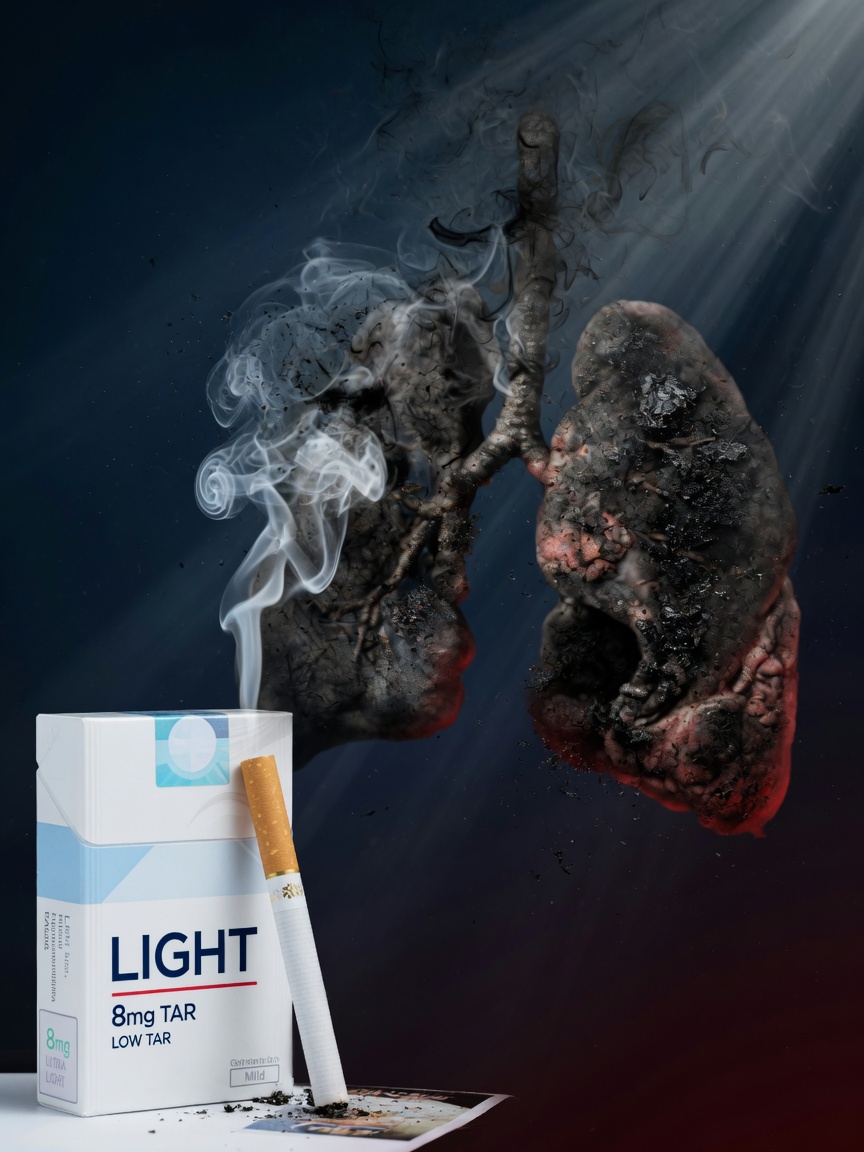
Finally, technical discussion should be separated from health facts: modifying tobacco processing and burn characteristics does not eliminate the health risks associated with tobacco use. This article is intended solely for understanding agricultural product processing and quality control and does not constitute encouragement to use tobacco products.
The most important aspect of this diagram is not the sequence, but the difference in what is controlled. Flue-curing primarily controls the temperature, relative humidity, and airflow inside the kiln; sun-curing must simultaneously monitor the sun, shed air, and leaf surface dehydration rate; during fermentation, the operator cannot rely solely on room temperature and humidity but must measure the actual temperature and moisture content at the center, edges, and upper/lower layers of the tobacco pile. A Yunnan local standard for air-curing divides the process into five stages—withering, yellowing, browning/color-fixing, and stem drying—with temperatures gradually increasing from 22–25°C to 35–40°C and relative humidity gradually decreasing from 80%–90% to 50%–60%, demonstrating that even natural curing is not simply "hang it up and wait for it to dry." Yunnan Local Standard
Flue-Curing: Using Hot Air to Control Color and Dehydration Separately
1. Harvesting and Loading: Don't Let Loading Density Ruin Uniformity First
Flue-cured tobacco is typically harvested in stages by maturity. Leaves should be strung or clipped soon after harvest; prolonged waiting, excessive leaf temperature, or overly thick stacking will cause localized premature yellowing and inconsistent dehydration. The essence of loading is to ensure similar airflow paths for every leaf: if too dense, air cannot penetrate the leaf layer, resulting in "surface dry, core damp" even with accurate kiln temperature settings; if too sparse, loading efficiency decreases and air velocity becomes excessive.
Practical management should at minimum record loading time, leaf stalk position, loading density, wet/dry bulb or relative humidity, and intake/exhaust status, rather than just a single kiln temperature figure. Fresh leaves typically contain very high moisture; the challenge of curing is to allow sufficient time for chlorophyll degradation and sugar transformation before removing moisture. Abruptly raising the temperature at the start commonly results in leaves dehydrating rapidly before they have fully yellowed, producing green veins and green patches.
2. Yellowing: Temperature Must Not Outpace Leaf Physiology
The goal of the yellowing stage is not immediate drying but uniform color transition from green to yellow while avoiding premature wilting. Curves vary by region and kiln type, but a common practice is to start in the 32–38°C range while maintaining relatively high humidity and limited dehumidification, so that dehydration speed matches yellowing speed. The most critical caution here is mistaking "leaf temperature" for "instrument temperature": leaf temperatures differ in densely loaded areas, near walls, and around intake and exhaust vents.
I prefer to judge yellowing completion by color uniformity, leaf tip/edge softness, and midrib condition rather than by strict hour counts. When harvesting after rain, when upper-stalk leaf proportion is high, or when loading is dense, the same schedule requires more cautious extension of the temperature and humidity equalization window.
3. Color Fixing and Stem Drying: Temperature Rise, Dehumidification, and Airflow Must Be Synchronized
After full yellowing, color fixing begins: hot air temperature is gradually raised and dehumidification increased to lock in the yellow color and prevent browning or mold. Stem drying follows, with further temperature rise to dry the midrib. If only temperature is increased without sufficient dehumidification, moisture redistributes within the leaf layer, causing a false "surface brittle, inner damp" condition. Conversely, overly aggressive dehumidification leads to premature hardening and dull coloration.
"Time control" in flue-curing is therefore not a matter of simple duration. Maturity, moisture content, kiln insulation, and fan performance all alter the optimal time for each stage. The appropriate endpoint is when leaves and midribs are dry enough for storage and transport, color is essentially uniform, and there are no green patches, serious mold spots, or scorched areas—not merely the fastest possible finish.
4. Effect on Final Burn Characteristics
The high-temperature hot-air process of flue-curing typically preserves brighter coloration and relatively pronounced sugar-related traits, but burn quality is not determined by "being thoroughly flue-cured" alone. Burn rate, coal-holding capacity, and ash composition are also affected by mineral elements, sugar/nitrogen balance, leaf tissue structure, redrying moisture, and subsequent blending. The most direct process correlation is: if drying is uneven, the finished product will have uneven moisture distribution, compromising cutting and burn stability; if greenish or excessive browning occurs, sensory quality and burn uniformity are difficult to salvage through subsequent steps.
Sun-Curing: Treating Sunlight as a Variable, Not a Free Heat Source
1. Pre-treatment and Stringing: Achieve a Consistent Starting Point First
Sun-curing relies primarily on sunlight, natural temperature, and ventilation, typically in open-air or shed setups. Stringing spacing, leaf orientation, and whether leaves are briefly wilted in the shade beforehand determine how uniform the starting point is across each batch. Shed curing is not simple shading: film opening/closing, end ventilation, ground moisture rebound, and nighttime rehumidification all alter the microclimate inside the shed.
A published patent for sun-cured yellow tobacco shed curing provides a representative operating range: during the withering and yellowing period, shed temperature is about 28–40°C with relative humidity around 70%; film is opened at 8–9 AM and closed at 6–7 PM; during stem drying, ventilation area is reduced to raise shed temperature, combined with seasonal humidity adjustments for moisture isolation. Shed Curing Method This is not a directly applicable "standard formula," but it points to the core of sun-curing management: what must be managed is diurnal fluctuation, not pretending that natural conditions are constant.
2. Sun Color Fixing: Balancing Leaf Temperature and Dehydration Rate
Direct sunlight on clear days rapidly raises leaf surface temperature and removes surface moisture, aiding color fixing and drying. However, under intense midday sun, leaves lose water too quickly, causing edges to dry while the midrib and inner layers remain damp, potentially damaging color and tissue structure. Sun-curing therefore typically selects appropriate time windows and uses shading, turning, or return to the shed for regulation. A published sun-curing method specifies 10–11 AM as the leaf exposure window, citing rising temperature and falling relative humidity as the rationale, while using the relatively stable nighttime shed environment in coordination with daytime ventilation and sunlight. Sun-Curing Method
In my view, the hardest part of sun-curing is not "reading the weather" but establishing decision thresholds despite uncontrollable weather: whether to suspend direct exposure during overcast or rainy conditions, whether to move leaves to ventilated shade when they feel crispy but the veins are still soft, and whether to prevent overnight moisture reabsorption. Every decision should be based on leaf condition and measured shed temperature and humidity, not just the calendar date.
3. Drying, Reconditioning, and Grading: Sun-Dried Does Not Mean Processable
Once leaves reach a dry state, excessive brittleness must be avoided, and grading, bundling, and storage should be carried out under appropriate reconditioning conditions. The risks in sun-curing come from both directions: too slow dehydration increases the risk of microbial activity and browning; too fast dehydration makes leaves brittle and prone to color loss and reduces subsequent processability. In published sun-cured red tobacco processes, post-sun-drying leaves are stacked for fermentation at about 15–20°C and 65%–75% relative humidity, indicating that "dry leaf" after sun-curing does not mean the flavor and processing state are finalized. Sun-Cured Red Tobacco Processing
4. Effect on Final Burn Characteristics
The character of sun-cured tobacco comes from strong light and heat exposure and significant diurnal fluctuation—this is both its distinction and a source of inconsistency. If leaves are overexposed to sun, localized tissue damage and uneven moisture distribution can occur, leading to uneven burn, unstable ash, or harsh aroma; if drying is delayed, greenish or off-odors may persist. Achieving relatively stable burn performance in sun-cured tobacco depends on batch consistency, appropriate reconditioning, and strict grading, not on extending sun exposure.
Fermented Tobacco: What Really Needs Managing Is the Inside of the Pile, Not the Room Temperature
1. Prerequisites for Fermentation: Raw Material Uniformity Comes First
The materials for fermentation are typically already cured and reconditioned tobacco leaves, strips, or specific cigar components. Before piling, stalk position, grade, moisture content, and batch should be as uniform as possible; mixing overly dry, overly damp, moldy, or temperature-abnormal leaves into the same pile amplifies subsequent variation. Moisture content is not simply "the higher, the better": it determines both the conditions for reaction and heat/mass transfer and directly affects mold risk.
A published fermentation method uses reconditioning to 16%–22% moisture content, fermentation at 25–40°C and 70%–90% relative humidity for 3 days, then drying to 11%–13%, repeating this cycle as needed for a total duration of 180–700 days. Tobacco Leaf Fermentation Production Method This illustrates one process window and approach but is by no means a universal parameter for all tobacco leaves; targets differ greatly by product, stalk position, and equipment.
2. Heating and Temperature Maintenance: Slower Is Often More Accurate
During fermentation, heat generated and accumulated inside the pile causes the center temperature to be higher than the edges, while moisture distribution is often inversely related. Research from Yunnan Agricultural University on cigar tobacco pile fermentation shows that the pile center temperature is significantly higher than the periphery, while the humidity field shows the opposite trend, and recommends upper limits by stalk position: lower, middle, and upper filler leaves should not exceed 45°C, 48°C, and 55°C respectively, with wrapper leaves about 5°C lower. Cigar Tobacco Pile Fermentation Research
This is also why I most strongly oppose the notion that "the higher the center temperature, the more complete the fermentation." When temperature rises too quickly, the poor thermal conductivity of tobacco bales causes surface moisture to migrate inward, leaving the surface overly dry and the interior overly damp; published patents clearly describe this mechanism and the resulting quality defects. Tobacco Fermentation Moisture Migration Explanation On-site operations should at minimum record pile center, edge, and upper/middle/lower layer temperatures at fixed intervals, and decide whether to turn, loosen, or adjust reconditioning based on temperature differentials and leaf feel, rather than assuming all is well because the room temperature reading is normal.
3. Turning, Moisture Equalization, and Cooling: Correcting Gradients, Not Just "Turning Over"
The purpose of turning the pile is to exchange positions between center and edges, upper and lower layers, releasing localized heat and redistributing moisture and oxygen. Turning too late may cause the center to overheat, become overly damp, and accumulate ammonia odor or mold risk; turning too frequently disrupts the temperature-humidity field just as it is being established, reducing process efficiency and consistency. Operation records should at minimum include turning date, pile type and dimensions, temperature at multiple points, leaf color/odor, whether moisture was added, abnormal leaf ratio, and treatment results.
Artificial fermentation cannot be judged by total days alone. Research published in Chinese Tobacco Science shows that under environmental conditions of 50.0°C and 55.0% relative humidity, middle-upper strip tobacco has optimal sensory quality after 5 days of insulation, while lower leaves are best at about 3 days. Effect of Artificial Fermentation on Strip Tobacco Quality Optimal time differs by stalk position; treating "12 days of fermentation" as a fixed answer across batches and materials is often more dangerous than having no answer at all.
4. Effect on Final Burn Characteristics
Proper fermentation can reduce greenish and harsh notes, improve aroma harmony, and make burn performance more stable. However, it is not a universal "refurbishing" step for any raw material. Studies list oil content, color, burnability, and ash as quality indicators for pile fermentation, demonstrating that burnability is a terminal observation evaluated alongside overall color, aroma, and tissue condition—not an independent indicator divorced from raw material conditions. Same Study
Parameters and Results: Horizontal Comparison
| Dimension | Flue-Cured | Sun-Cured | Fermented |
|---|---|---|---|
| Process Position | Primary curing | Primary curing | Post-curing deep processing/aging |
| Dominant Energy & Environment | Hot air, kiln, fan | Sunlight, natural ventilation, shed microclimate | Pile self-heating/external temperature regulation, reconditioning & ventilation |
| Temperature Control | Staged increase, emphasis on kiln uniformity | Follows weather, emphasis on avoiding intense sun and nighttime moisture reabsorption | Emphasis on center vs. edge temperature differences; room temperature alone insufficient |
| Humidity Control | High during yellowing; increased dehumidification during color fixing/stem drying | Heavily influenced by day/night and rainfall; controlled by covering, ventilation, shading | Linked to raw material moisture; too high causes mold, too low inhibits reaction |
| Time Scale | Typically days, depends on kiln type | Days to weeks, weather-dependent | From days of artificial cycling to weeks or months |
| Main Loss-of-Control Signals | Green patches, green veins, scorched areas, surface-dry-core-damp | Sun-brittleness, moisture reabsorption, browning, batch inconsistency | Pile center overheating, internal dampness with external dryness, ammonia odor, mold spots |
| Burn-Related Outcomes | Based on drying uniformity and subsequent moisture stability | Based on leaf tissue integrity, batch consistency, and appropriate reconditioning | Based on improved component harmony, oil content, color, and tissue condition |
A Practical Recording Framework
Whichever route is chosen, I prefer to turn process management into a standardized batch card rather than relying on memory:
1. Raw Material Card: harvest date, variety, stalk position, maturity, fresh leaf condition, batch number, initial quality. 2. Environment Card: start and end times for each stage, temperature, relative humidity, ventilation/cover/dehumidification actions; for fermentation, record pile center and edge separately. 3. Leaf Card: color, softness, midrib dryness, mold spots, odor, breakage rate, abnormal ratio, supported by photos from the same batch for comparison. 4. End-Point Evaluation Card: grading result, reconditioning status, processing loss, burn uniformity, coal-holding capacity, ash appearance, and sensory record.
After recording three batches, the most valuable insight is often not finding an "optimal temperature" but identifying which variable first goes out of control when raw material variation occurs. For example, when continuous rain causes sun-cured batches to regain moisture, the first adjustment is to the cover opening and ventilation window; when the fermentation pile center consistently runs hotter than the edges, the first checks are pile shape, initial moisture, and turning timing, not immediately lowering the room temperature.
Conclusion: Keep "Drying" and "Aging" Separate to Avoid Process Missteps
Flue-curing pursues repeatability under a controlled hot-air curve; sun-curing utilizes but does not submit to the weather; fermentation uses time to rebalance components and sensory qualities. Their common baseline is uniformity: uniform yellowing, uniform dehydration, uniform heating, and uniform moisture reabsorption. None of these routes can be represented by a single temperature, a single humidity, or a single total duration.
Finally, technical discussion should be separated from health facts: modifying tobacco processing and burn characteristics does not eliminate the health risks associated with tobacco use. This article is intended solely for understanding agricultural product processing and quality control and does not constitute encouragement to use tobacco products.