Temperature, Humidity and Time Control Techniques During the Yellowing Period of Flue-Cured Tobacco and Their Impact on Final Sugar Content and Combustion
The yellowing period is a critical stage in tobacco curing that determines sugar conversion and final combustion quality. This article provides an in-depth analysis of the synergistic control mechanism of temperature, humidity, and time.
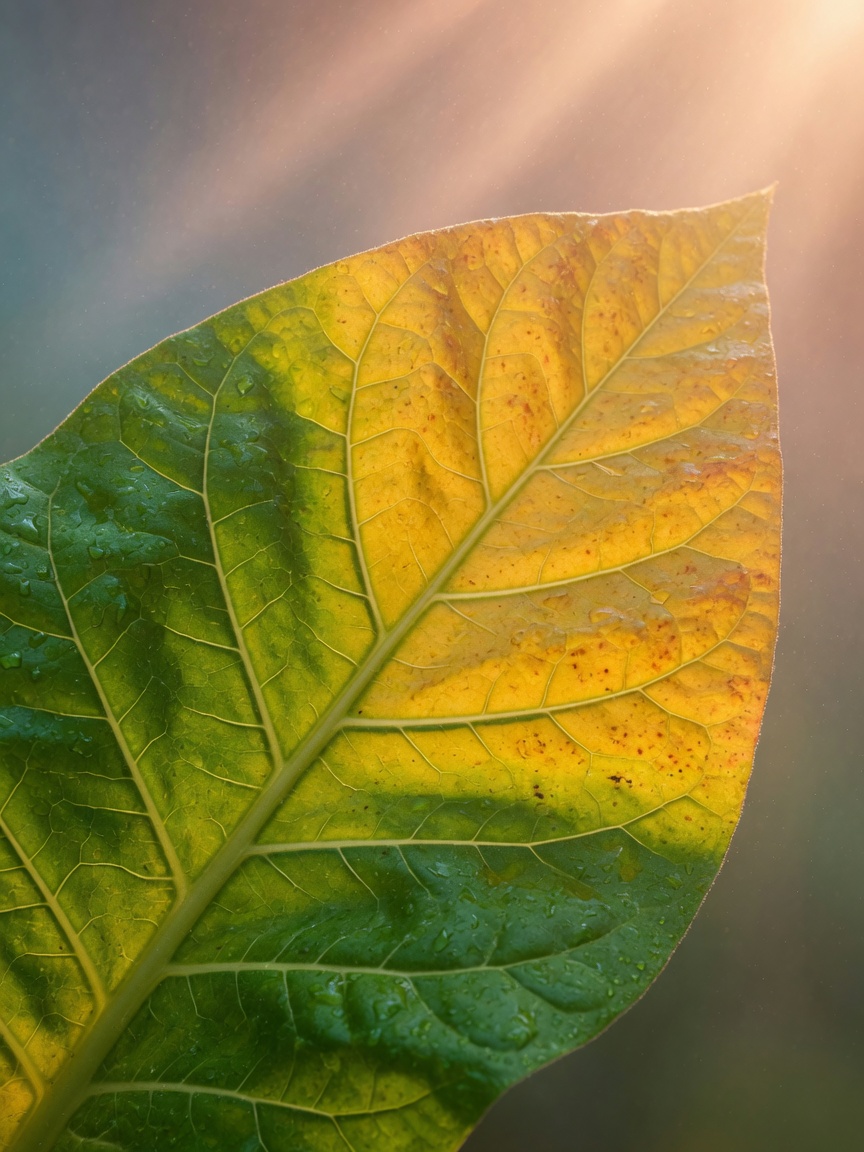
Temperature, Humidity and Time Control Techniques During the Yellowing Period of Flue-Cured Tobacco and Their Impact on Final Sugar Content and Combustion
Introduction: The Yellowing Period — The "Critical Juncture" of Tobacco Quality
In the long history of tobacco curing, if the drying period is a test of patience, then the Yellowing Period is the decisive "game" that determines victory or defeat. For a craftsman with decades of curing experience, the yellowing period is far more than a simple physical process of turning tobacco leaves from green to yellow; it is an extremely complex biochemical transformation conducted under controlled conditions.
Many beginners, and even some inexperienced technicians, often regard the yellowing period simply as a period of "waiting." They believe that as long as a certain temperature is maintained, the leaves will naturally turn yellow. This notion is extremely dangerous. The yellowing period is the stage when tobacco leaves exhibit the most vigorous physiological activity and the most intense biochemical reactions. During this stage, every subtle adjustment of temperature, every fluctuation in humidity, and every shift in the time window will ultimately be reflected, like a butterfly effect, in the sugar content, aroma components, and most importantly — the combustion performance of the tobacco leaves.
I often say that an excellent curer does not "cure" tobacco, but rather "guides" the leaves to complete their final sublimation of life. The control technique of the yellowing period is essentially about managing the delicate balance between enzymatic reactions and respiration within the leaf cells.
The Physiological Mechanism of the Yellowing Period: The Battle of Enzymes, Sugar, and Respiration
To understand how to control the parameters, one must first see the "war" taking place inside the tobacco leaf.
During the yellowing period, due to the effects of moisture and heat, the cells of the tobacco leaf undergo a series of drastic physiological changes. The core contradiction lies in the competition between two processes: one is Enzymatic Reactions, particularly the action of dehydrogenases and oxidases, which are responsible for degrading chlorophyll and promoting the conversion of starch into sugar; the other is Respiration, which, although a source of energy, excessive respiration consumes the hard-earned sugars and produces excessive carbon dioxide and heat, leading to cell tissue damage.
1. Enzymatic Reactions: The Engine of Sugar Accumulation
The core objective of the yellowing period is to achieve efficient conversion of starch into reducing sugars (such as glucose and fructose). This process is highly dependent on the activity of a series of enzymes.
If the temperature is too low, enzyme activity is inhibited, yellowing proceeds very slowly, resulting in dull leaf color and incomplete starch conversion, giving the leaves a lack of "strength" (poor burning sensation). If the temperature is too high, although the reaction accelerates, enzymes become denatured, causing the conversion process to halt abruptly or even leading directly to cell collapse.
2. Respiration: The "Consumer" That Cannot Be Ignored
Respiration is a necessary process for maintaining cell life activities, but it is a double-edged sword. During the yellowing period, as the temperature rises, the respiration intensity of tobacco leaves increases exponentially.
If not properly controlled, excessive respiration will produce two fatal consequences:
Therefore, the technical core of the yellowing period lies in finding a "golden window" through precise temperature and humidity control that maximizes the efficiency of enzymatic reactions while minimizing respiratory losses.
Key Parameter Control: The "Golden Window" of Temperature and Humidity
In actual production, the control of the yellowing period is never a single variable but a deep coupling of temperature, humidity, and time.
1. Temperature Control: A Gradient Art in Stages
Temperature control during the yellowing period cannot be a one-size-fits-all approach; it must follow the gradient principle of "from low to high, step by step."
I have seen some factories, in pursuit of efficiency, directly raise the temperature to over 55°C at the very beginning of the yellowing period. What was the result? The leaves did turn yellow quickly, but the color was extremely uneven. Moreover, due to excessive respiration, the sugar inside the leaves was completely consumed. The resulting leaves looked "dry and lifeless," had no aroma at all, and produced thin, weak smoke during combustion.
2. Humidity Control: The "Lubricant" of Moisture Migration
If temperature is the "engine" driving reactions, then humidity is the "lubricant" regulating the reaction speed.
During the yellowing period, the core logic of humidity control is to maintain relatively high relative humidity (typically between 85% - 95%) to promote moisture migration from the leaf interior to the leaf surface and sustain the enzyme activity environment.
3. Time Window: The Uncrossable Physiological Rhythm
Each variety of tobacco leaf has its specific physiological rhythm. The duration of the yellowing period is directly influenced by pre-harvest growth conditions (such as nitrogen fertilizer application) and the initial parameters of the curing process.
Experience shows that the duration of the yellowing period is typically between 3 to 5 days. The core of time control lies in "observing color and feel." Ending the yellowing period too early results in high nitrogen content, dark color, and poor combustibility; ending it too late leads to excessive oxidation, darkening the leaf color and degrading aroma quality.
Practical Cases: The "Pitfalls" We Have Encountered Over the Years
As a technical professional, theoretical knowledge is certainly important, but true growth often comes from reviewing failure cases.
Case 1: The "Darkening Trap" Caused by Humidity Loss of Control
In a large batch of flue-cured tobacco, a sensor malfunction in the exhaust system caused the relative humidity during the mid-yellowing period to plummet from the preset 90% to 60%.
The situation at the time was: the temperature was still maintained at 48°C, but due to the sudden drop in humidity, the moisture on the leaf surface rapidly evaporated, forming a thick "hard shell." This hard shell acted like a barrier, blocking the internal conversion of starch to sugar and hindering the expulsion of carbon dioxide. As a result, although the leaves eventually turned yellow, the color was extremely dull, presenting a murky brown hue, completely lacking the expected golden-yellow luster. More seriously, due to hindered internal respiration, localized overheating occurred inside the leaves, leading to "scorch spots" in some leaves, completely ruining the quality.
Lesson: The continuity of humidity control is even as important as temperature control.
Case 2: The "Sugar Hollow" Caused by Excessive Temperature Gradient
Another case occurred during an experiment attempting "rapid yellowing." The technical team tried to increase the temperature gradient at the beginning of the yellowing period, raising the heating rate by 20%.
The experimental results were astonishingly disappointing. Although the yellowing time was shortened by nearly 12 hours, chemical composition testing revealed that the reducing sugar content of these leaves was a full 15% lower than that of conventionally cured leaves. Why?
Because the excessively rapid heating directly triggered a "stress response" in the leaves. High temperatures accelerated respiration; to sustain life in the high-temperature environment, the leaves had to consume a large amount of internally accumulated sugar to produce energy. This is like a person who has to exhaust all their physical reserves to run fast, ending up as nothing but an empty shell. When burned, such leaves produce minimal smoke, have a distinct sour taste, and completely fail to meet commercial standards.
Lesson: Speed does not equal efficiency. In biochemical reaction control, a steady gradient is the only path to high quality.
In-Depth Analysis: How Parameters Determine Final Sugar Content and Combustion Performance
What is our ultimate pursuit? High-quality tobacco leaves. And the definition of high quality largely depends on: sugar content, aroma components, and combustion stability.
1. The Intrinsic Relationship Between Sugar Accumulation and Combustion Rate
The parameter control of the yellowing period directly determines the final concentration of reducing sugars. Sugar is not only the source of tobacco aroma but also the "fuel" in the combustion process.
2. Degree of Oxidation and Smoke Composition
The control of the yellowing period also affects the distribution of nicotine and various volatile substances in the leaves.
If the yellowing period is properly controlled, the degree of oxidation is moderate, and sufficient aroma substances can be retained. If over-controlled (excessively high temperature or prolonged time), the leaves undergo excessive oxidation, causing aroma substances to dissipate, resulting in a sharp, pungent smoke.
Through precise regulation of temperature and humidity, we are essentially controlling the balance between the "degree of oxidation" and "degree of reduction" in the leaves, thereby achieving that perfect smoke which is both full-bodied and non-irritating.
Conclusion: Advancing Towards the Intelligent Age of Precision Curing
Reflecting on the control techniques of the yellowing period, we see not just numbers related to temperature and humidity, but also respect for and mastery over the science of life. From traditional "empiricism" to modern "parameterized control," curing technology is undergoing a profound transformation.
The future of curing technology will certainly not remain merely at setting a temperature value. With the advancement of sensor technology and the application of artificial intelligence algorithms, future yellowing period control will achieve "dynamic sensing" and "real-time response." The system will be able to automatically adjust the exhaust volume and steam volume of each curing unit based on the real-time physiological signals of the leaves (such as subtle changes in the temperature difference between the leaf and the environment, moisture migration rate, etc.), achieving true "individualized strategy for each leaf."
However, regardless of technological progress, for the curer, understanding the biochemical logic behind the yellowing period remains the cornerstone of mastering this art. Only by understanding that battle of enzymes, sugar, and respiration can you, in the digital age, still possess the eyes that can "hear" the breath of the tobacco leaf.